
The Symptom Almost Everyone Recognizes
Of every AC complaint we hear, warm air from the vents is the most common, and it's also the one most likely to get misdiagnosed by a homeowner trying to guess at the cause before calling. The instinct is to assume the refrigerant is low, and sometimes that's exactly right. Other times the refrigerant is fine and the real problem is somewhere else entirely. Understanding what's actually happening inside the system when warm air comes out helps you describe the problem accurately on the phone and gives you a sense of whether it's safe to keep running the system until a technician arrives.
What "Warm" Actually Means
Before anything else, it helps to separate two different complaints that get described the same way. Air that's merely less cold than usual, still cool but not as strong as it used to be, points toward a gradual problem, something wearing down over time. Air that's genuinely warm, close to room temperature or warmer, points toward something that has stopped working almost entirely rather than something declining slowly. The gradual case often means a slowly developing refrigerant leak or a coil that's been collecting dust for months. The sudden case often means the compressor isn't running at all, even though the blower fan is still pushing air through the house, which can feel like the whole system failed when really only one component has.
Cause One: The Compressor Isn't Running
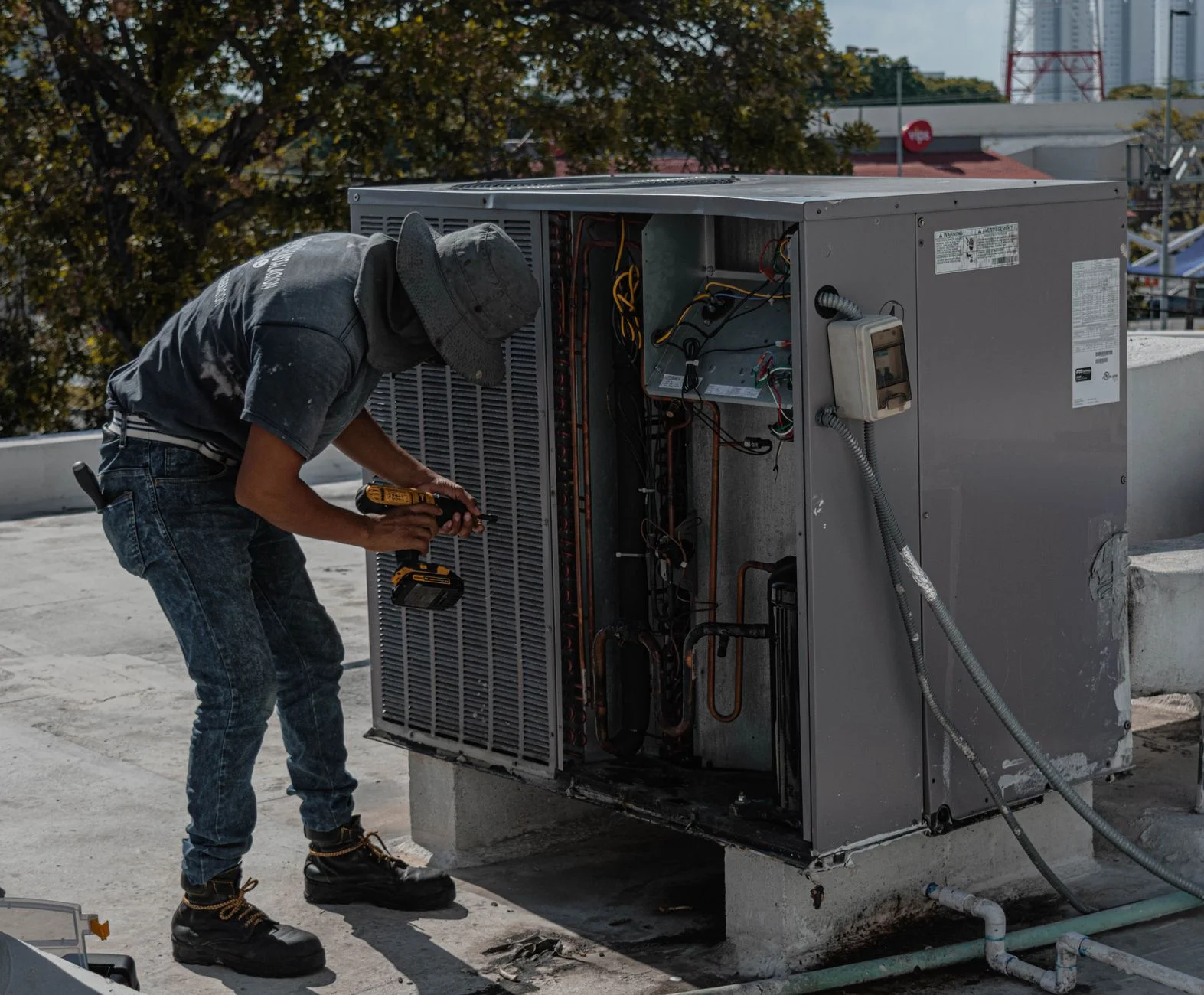
Your indoor blower and your outdoor compressor are two separate motors, and it's entirely possible for the blower to keep pushing air through your vents while the compressor outside sits silent. When that happens, you get airflow, so it feels like the system is working, but none of that air is actually being cooled. This is one of the more common reasons for a sudden switch from cold to warm air, and it usually traces back to a failed capacitor, a tripped high pressure switch, or a problem at the outdoor disconnect. The fix here is often more straightforward than people expect, since the coil and refrigerant charge might be perfectly healthy; the compressor simply isn't getting the signal or the power it needs to start.
Cause Two: Low Refrigerant From a Slow Leak
Refrigerant doesn't get consumed through normal use the way fuel does. If your system is low, refrigerant is escaping somewhere, usually a slow leak at a fitting, a valve, or a pinhole in the coil itself. As the charge drops, the system loses its ability to absorb heat efficiently, and the air coming out gradually warms even though every motor in the system is running exactly as it should. This is why simply adding refrigerant without finding the leak first is a temporary fix at best. The system will drop back down to the same low level within months, sometimes weeks, and you'll be back to warm air again with the underlying problem never actually addressed.
Cause Three: A Dirty Evaporator or Condenser Coil
Your system has two coils, one indoors that absorbs heat from your home's air, and one outdoors that releases that heat into the outside air. Both depend on being clean to work efficiently. An evaporator coil buried under a season's worth of dust loses much of its surface area to actually pull heat out of passing air. A condenser coil clogged with yard debris, common in homes throughout Canyon Country and Saugus where properties often back up to open brush, can't release heat fast enough, which backs pressure up through the whole system and weakens performance at the vents. Neither of these problems shows up as an error code or a warning light. They show up gradually, as air that used to feel cold enough now feels merely cool.
Cause Four: Restricted Airflow
Sometimes the coil and refrigerant are both fine, and the problem is that not enough air is passing across the coil to begin with. A clogged filter is the most common cause, but a partially closed damper, a collapsed section of flexible ductwork, or furniture blocking a return vent can all starve the system of airflow in the same way. When airflow drops too far, the evaporator coil can actually get cold enough to freeze, which then blocks airflow even further and makes the warm air problem worse rather than better. This is why we always check airflow before assuming a refrigerant problem, since fixing a filter costs far less than a refrigerant repair that was never actually needed.
Cause Five: A Thermostat Reading the Wrong Temperature
Occasionally the air coming out really is cold, and the problem is that the thermostat is misreading the room and shutting the system off too early, or a wiring issue is preventing the cooling call from reaching the outdoor unit at all. This is less common than the mechanical causes above, but it's worth ruling out with a simple reference thermometer before assuming the equipment itself has failed.
What to Do While You Wait for a Technician
If your air has turned warm, it's usually fine to keep the system running while you wait for service, with one exception: if you notice ice on the refrigerant lines or hear the compressor straining and cycling rapidly, shut the system off and switch the thermostat to fan only. Continuing to run a system that's iced over or straining can cause more expensive damage than the original problem, particularly to the compressor.
Why This Matters More in a Santa Clarita Valley Summer
When afternoon highs push into the mid nineties and beyond, as they routinely do across Newhall and the surrounding valley, the gap between a system that's working and one that's merely running gets obvious fast. A system with a slowly developing leak might keep a coastal home tolerably comfortable for weeks before anyone notices. In our climate, a modest drop in performance shows up as a genuinely uncomfortable house within days, which is part of why we treat warm air complaints as worth a same day look rather than something to put off until next week.
Getting the Right Diagnosis the First Time
The five causes above can produce nearly identical symptoms at the vent while requiring completely different repairs, which is exactly why guessing from the driveway leads to wasted money. A proper diagnostic visit measures the temperature split, checks refrigerant pressure, tests the capacitor, and confirms airflow before recommending anything, so the repair actually matches the cause.
A Quick Check You Can Do Before You Call
You don't need any tools to gather a little useful information before a technician arrives. Feel the return vent, usually the largest vent in a hallway or central location, and compare it to a supply vent in a room that's complaining of warm air. If the return feels noticeably warmer than normal room temperature, the system may not be pulling in enough air to begin with, which points toward a filter or airflow issue rather than refrigerant. Also worth noting: does every room feel equally warm, or just one? A single warm room with the rest of the house cooling normally points toward a duct or damper problem specific to that room, not a system-wide failure. Passing along these small observations when you call helps us bring the right approach to the visit instead of starting from scratch once we arrive.
Why Waiting Rarely Helps
It's tempting to let a mildly warm system run for another week or two, especially if the house is still tolerable. The trouble is that most of the causes above get worse with time rather than staying the same. A slow refrigerant leak keeps leaking. A dirty coil keeps collecting dust. A capacitor that's starting to weaken keeps weakening. What starts as a minor drop in performance in June tends to become a full breakdown in July or August, right when demand for repairs is highest and a home without cooling is hardest to tolerate. Addressing warm air as soon as you notice it, rather than after it's gotten uncomfortable, is usually the difference between a routine repair and an emergency one.
Get an Answer, Not a Guess
If warm air is coming from your vents, call Newhall AC & Heating at (877) 583-4462. We'll find the actual cause before recommending a repair, and we'll explain what we find in plain terms so you understand what's happening in your own system. We serve Newhall, Canyon Country, Saugus, Valencia, and Stevenson Ranch.
Need Professional HVAC Service?
Our HVAC-experienced technicians are ready to help with all your AC and heating needs. Contact Newhall AC & Heating today for expert service throughout the the Santa Clarita Valley service area.