

Two Symptoms, One Hidden Cause
A bedroom that never quite matches the rest of the house and a utility bill that's crept up without explanation feel like unrelated problems. Very often they trace back to the same cause: ductwork that's leaking, disconnected, or poorly insulated somewhere between your air handler and the vents. Because that ductwork usually runs through the attic where nobody ever looks, the underlying cause stays invisible while the two symptoms it produces show up in completely different parts of your life, one as a comfort complaint and one as a number on a bill.
Why Attic Ductwork Fails in the First Place
Santa Clarita Valley attics see a wider temperature swing than most people realize, baking well past 130 degrees on a summer afternoon and dropping close to freezing on the coldest winter nights. Sheet metal and flexible duct running through that swing expand and contract with every cycle, year after year, and eventually that constant movement pulls joints apart, breaks down the tape or mastic holding them together, and can knock insulation loose from the duct wall entirely. It's why homes throughout Canyon Country, Saugus, and the older sections of Valencia with original ductwork tend to show the most leakage: their duct systems have simply logged more of these expansion and contraction cycles than a newer installation has.
Reading the Comfort Symptom Correctly
Not every uneven room points to a duct leak. A room at the far end of a long duct run can run warmer or cooler than the rest of the house simply because of distance and heat loss along the way, without any actual leak involved. A room that's uneven only during the hottest or coldest part of the day, but fine the rest of the time, often points toward insulation or sun exposure rather than ductwork. What separates a genuine duct leak is usually a room that's uneven consistently, regardless of time of day or outdoor temperature, paired with one of the other signs below.
Reading the Bill Symptom Correctly
A bill that's higher because you ran the system more, during a genuine heat wave or an unusually cold stretch, isn't necessarily a duct problem. A bill that's climbing month over month while your habits and thermostat settings stay the same, or a bill that's noticeably higher than the same month last year under similar weather, is worth investigating. Conditioned air that never reaches a vent doesn't just fail to cool or heat that room, it also doesn't get counted as wasted anywhere obvious. It just quietly runs the system longer than it should need to.

The Sound You Might Be Able to Hear
If you have safe attic access, a rushing or hissing sound while the system runs is one of the more direct signs of a duct leak, and it's worth a look with a flashlight before assuming you'd need a professional test to find anything. Not every leak makes noise loud enough to hear, but when one does, it's usually a significant leak worth addressing.
Supply Leaks Versus Return Leaks
A leak on the supply side, the ducts carrying conditioned air from your equipment out to the vents, loses air into the attic before it ever reaches a room. You feel this as weak airflow and uneven temperatures. A leak on the return side works differently: instead of losing conditioned air, it pulls in unconditioned attic air, along with dust and insulation fibers, directly into your duct system and then through your living space. Homes throughout Canyon Country and Saugus with older return plenums are where we most often find this, and it shows up less as an uneven room and more as dust settling unusually fast on furniture even with a clean filter installed. Both types of leak waste energy, but only the return leak also affects what you're actually breathing.
How We Actually Find a Leak
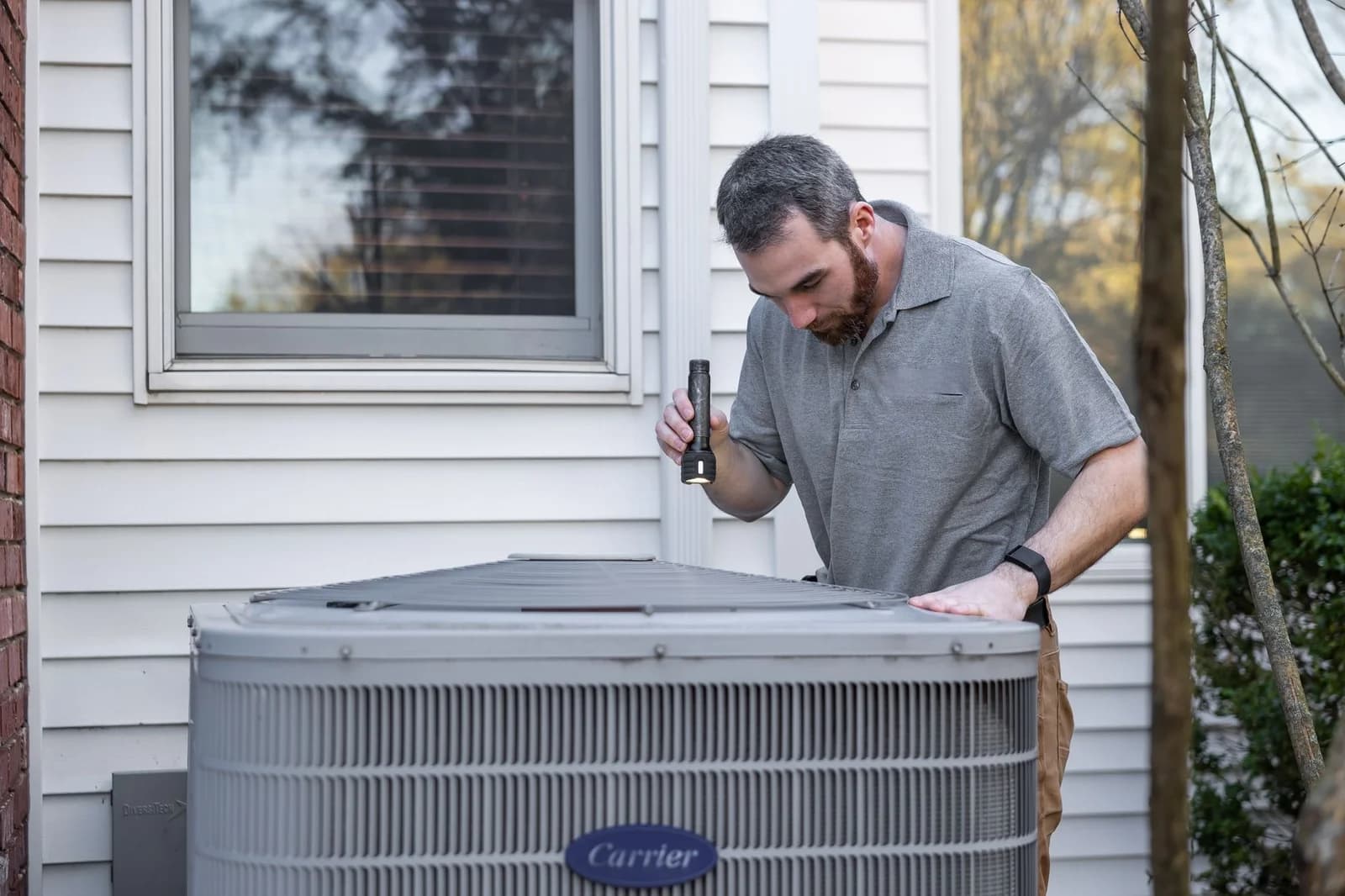
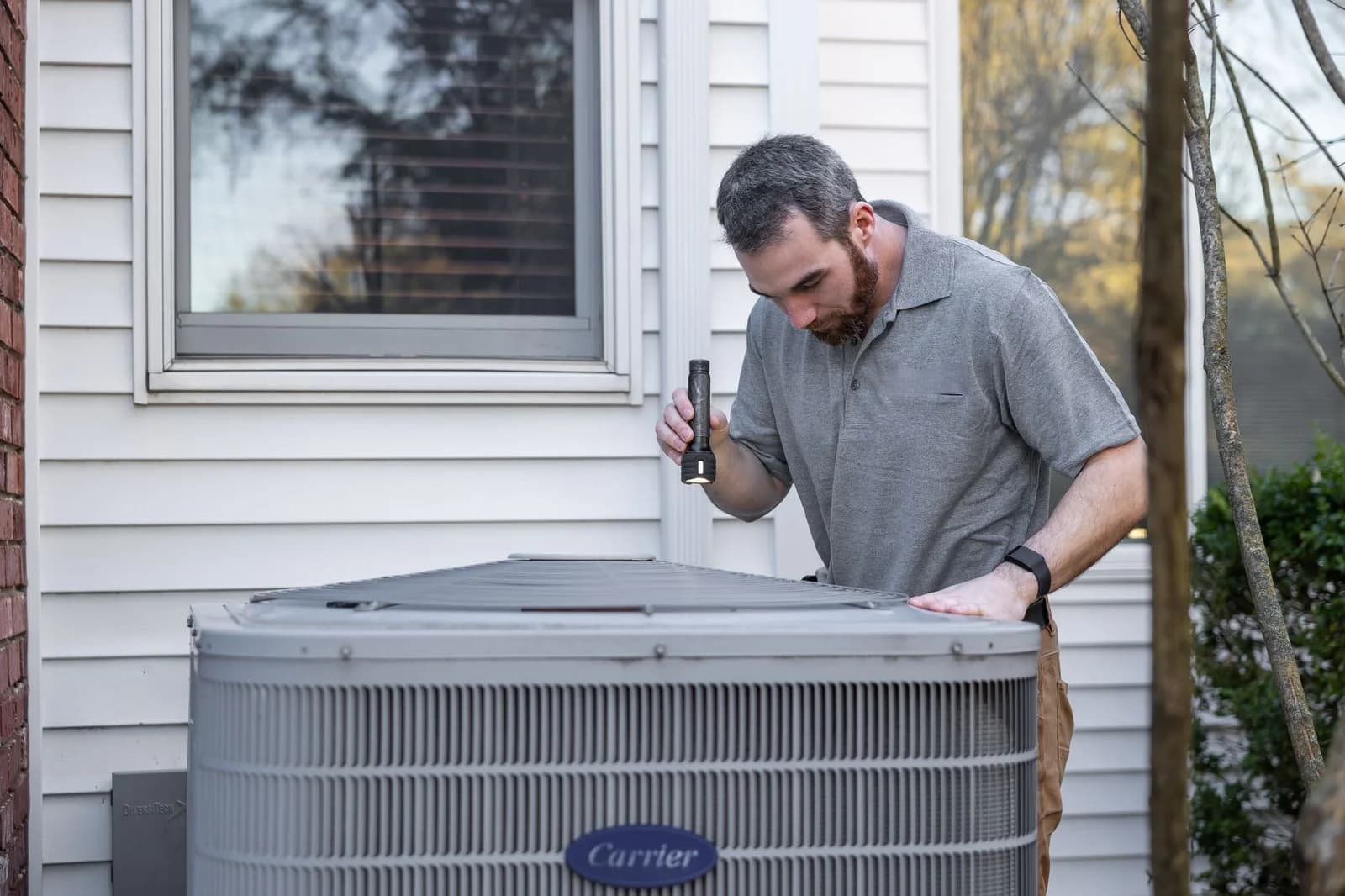
Finding a leak starts with a walk through the attic wherever access allows it. A technician looks closely at every joint, boot, and connection point along the visible ductwork, checking for tape that's peeled back, flex duct that's torn, or insulation that's slid away from where it should sit. It's surprising how many leaks turn up this way, found simply by someone actually being up there with a light rather than guessing from below.
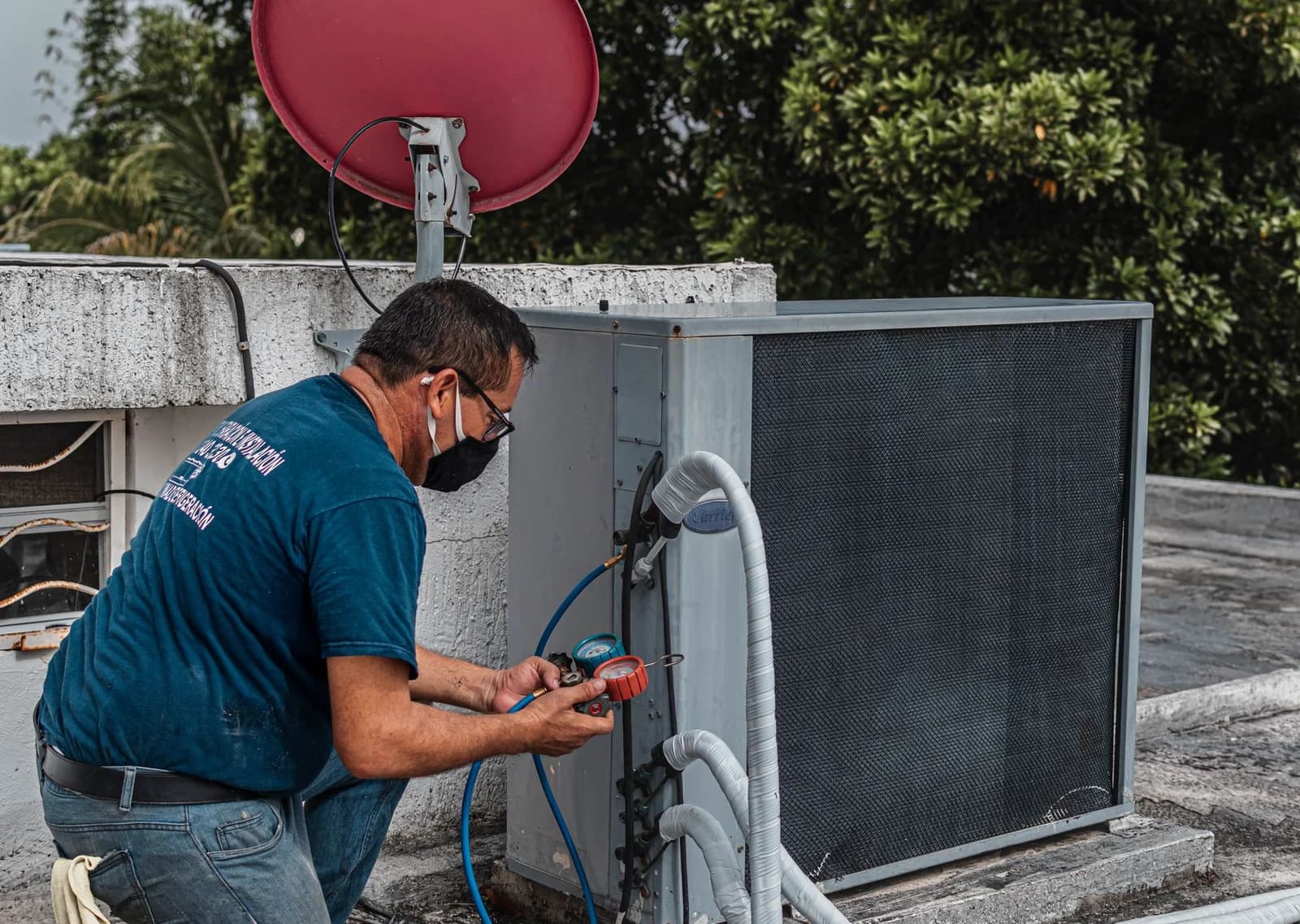
When the picture needs to be more exact, we pressurize the duct system and track how much air escapes before ever reaching a vent. That test doesn't just confirm a leak is present, it tells us the scale of it, which is what lets us decide whether a couple of joints need attention or the whole system does.
We also compare what each supply vent is actually delivering against what the equipment is rated to produce. A vent that's clearly underperforming, particularly one feeding a room you've already told us runs uneven, usually traces back to a leak somewhere along that specific duct run, and it gives us a starting point before we ever open a wall or ceiling.
How We Fix What We Find
Most of what we find comes down to separated joints, and those get sealed with duct mastic, a paintable compound that holds up to attic temperature swings far longer than tape ever does on its own. A section of flex duct that's slipped off its collar gets reattached and strapped back into place so it stays put. Anything torn or crushed beyond repair gets swapped for a new section cut to the correct diameter, so the run keeps moving the amount of air it was designed for. And wherever insulation has come loose or compressed down over the years, we put it back where it belongs, since an uninsulated run sitting in a 130 degree attic bleeds cooling before that air ever gets anywhere near your living space.
For Widespread Leakage, Sealing From the Inside
Some duct systems don't have one or two problem joints, they have small gaps scattered throughout, including stretches buried behind drywall or insulation that nobody can physically get to. For those homes, we turn to Aeroseal, a process that pumps a fine polymer mist through the ductwork from the inside, letting it find and close gaps down to the size of a pinhole across the entire system in one visit. We test leakage before starting and again once it's done, so the improvement shows up as a number you can actually see rather than something you have to take our word for.
What This Means Before You Replace Equipment
If you're considering a new AC system or furnace because performance has dropped, it's worth ruling out duct leakage first. A brand new, correctly sized system connected to leaking or poorly insulated ductwork will never perform to its rated capacity, and you'll end up troubleshooting the same uneven rooms and rising bills with equipment that was never actually the problem.
What a Duct Inspection Report Actually Tells You
After we finish testing, we walk you through what we found in plain terms rather than handing over a page of numbers and leaving you to interpret it. That usually means showing you where the leaks are concentrated, whether the loss is significant enough to explain the symptoms you called about, and which repairs would make the biggest difference for the least cost. Some homes have one or two clearly disconnected joints doing most of the damage, an easy and inexpensive fix. Others have leakage spread thin across many small gaps throughout the system, which points more toward a whole-system approach like Aeroseal rather than chasing individual joints one at a time. Either way, you'll know exactly what we found and why we're recommending a specific approach before any sealing work begins.
How Long Duct Sealing Takes
Sealing a handful of accessible joints with mastic is usually a same-visit repair, often completed within a couple of hours depending on how many connections need attention and how easy the attic is to move through. A whole-system Aeroseal treatment takes longer, typically most of a day, since it involves setting up equipment to measure leakage, running the sealing process itself, and then measuring again afterward to confirm the improvement. We'll give you a realistic estimate of time before starting, based on what the inspection actually found in your specific attic.
Rule Out Duct Leakage Before Anything Else
A room that never matches the rest of the house, or a bill that keeps climbing without a clear reason, is worth ruling out before you assume the equipment itself is at fault. Call Newhall AC & Heating at (877) 583-4462 and we'll book a duct inspection for your Newhall, Canyon Country, Saugus, Valencia, or Stevenson Ranch home, then walk you through exactly what we found and what it's costing you, in writing, before any sealing work begins.
Need Professional HVAC Service?
Our HVAC-experienced technicians are ready to help with all your AC and heating needs. Contact Newhall AC & Heating today for expert service throughout the the Santa Clarita Valley service area.